- McCormick’s 1-hitter lifts Foothillers
- 2025 Flag Football Standings/Team Pix
- By inches, Pat. Henry grabs Western lead
- Community Colleeges: February 16-22
- Stars win opener at NBC World Series
- ROUND UP: Wolf Pack Take Down Eastlake
- Woodland’s Gem Propels Helix
- Patriots out-slug Vaqs to claim opener
- Rain Doesn’t Stop Wolf Pack
- Gallery: Boys Hoops – Week 10
- Vaqs continue qinning ways In tight contest
- VALLEY: Sultans finish undefeated season
- It takes the Pack to sweep Scotties
- Mujica & Co. keep rolling, win convincingly
- Singer retires again from coaching
- DIII: Southwest Eagles soar to championship
- 2018 EAST COUNTY SOFTBALL Schedule / Scores / Standings
- DV: LIONS ROAR TO CHAMPIONSHIP
- Williams, Vaqueros sweep into D3 final
- D2: After walk-off thrill, Sultans slump
Cajon Speedway great Gay passes away at 74
- Updated: May 27, 2026
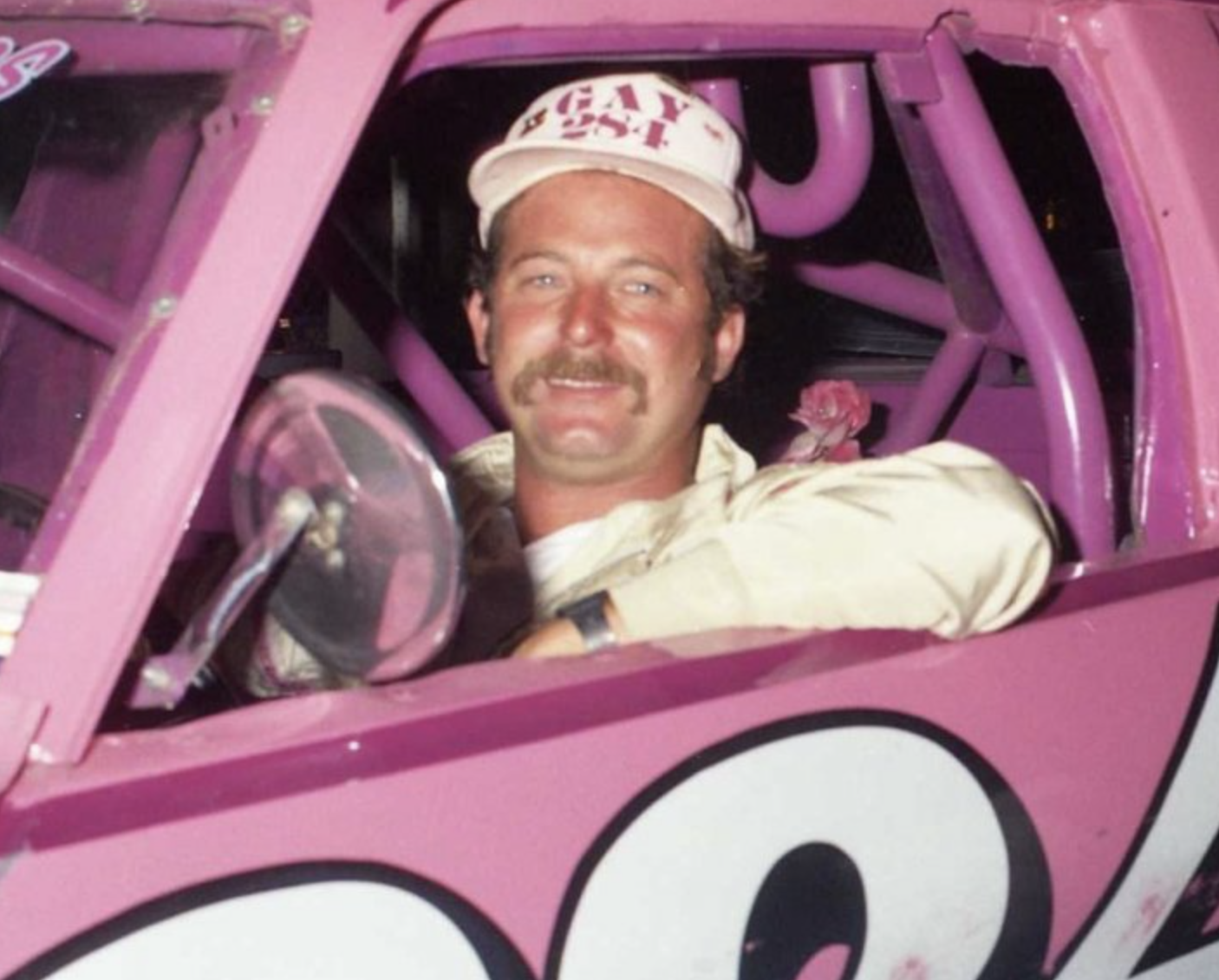 Jerry Gay in his pink Sportsman car
2026 LOCAL COVERAGE
EastCountySports.com staff report
EL CAJON — Jerry Gay, the hard-nosed racer whose pink stock car became one of the most recognizable symbols of Cajon Speedway during the golden era of San Diego short-track racing, died Monday night, May 25, 2026. He was 74.
Gay’s daughter, Chrissy, announced his passing in a heartfelt message posted to social media Tuesday morning, saying he died at approximately 11:20 p.m. on Memorial Day after spending the past year living with family.
“It is with a broken heart that I must let you all know that my Dad, Jerry Gay, passed away,” she wrote. “Dad was a little crusty on the outside, but a few of us know he was really mushy on the inside.”
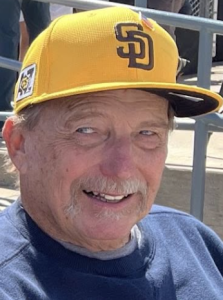
Jerry Gay
For more than 30 years, Gay was one of the defining personalities at Cajon Speedway, the famed three-eighths-mile paved oval adjacent to Gillespie Field in El Cajon that served as the heartbeat of San Diego stock car racing from 1961 until its closure in 2005. Whether fans cheered him or rooted against him, Gay commanded attention every Saturday night he rolled through the pit gate.
Known for his trademark pink race cars and occasional pink tuxedo appearances, Gay combined swagger, toughness and relentless competitiveness into a persona that made him perhaps the most recognizable local driver ever to race at Cajon Speedway. He was the type of driver fans paid to watch — aggressive, unapologetic, calculating and almost impossible to intimidate.
“Everyone knew Jerry Gay,” his daughter wrote. “Love or hate him, his accomplishments spoke for themselves, and you couldn’t help but respect him.”
His accomplishments were considerable.
Gay amassed 136 career feature victories at Cajon Speedway, the second-most in track history, and captured eight championships during a career that stretched across multiple divisions and generations of racers. He won NASCAR Late Model Sportsman championships in 1996 and 2000, and in 2001 made his first career Southwest Series start after decades as one of Cajon’s premier weekly competitors.
Born and raised in the Brookside neighborhood between Spring Valley, Lemon Grove and La Mesa, Gay developed a fascination with race cars as a teenager. By age 16, he had already built his first figure-eight race car, though he was too young to drive it himself and neighborhood kids pooled money to hire a driver.
Gay officially began racing at Cajon Speedway in 1971 before stepping away briefly to raise a family. He returned to the cockpit in 1977 and rarely slowed down afterward, progressing from Limited Stocks to Street Stocks and eventually becoming one of the dominant Sportsman drivers of the 1990s.
Away from the racetrack, Gay owned a fabrication and automotive shop where he performed welding, metal fabrication and race-car work, balancing long hours in business with the demands of maintaining competitive race equipment. Racing was never about money for him — it was obsession, identity and adrenaline.
“It’s like a heroin addict, I need to get my fix,” Gay once told the San Diego Reader in a 2001 profile that chronicled both his racing career and his famous father-son rivalry with fellow driver Danny Gay.
The story helped cement Gay’s reputation beyond the racetrack, portraying him as a crafty veteran known around Cajon as “the old fox” — a driver capable of taking up every inch of racing groove and forcing younger competitors to earn every position the hard way.
Among those trying to beat him was his son Danny, who carried the family name into Cajon’s Late Model Sportsman division. Their weekly battles became one of the track’s biggest attractions during the early 2000s, with fans packing the grandstands to watch father and son race inches apart at speeds approaching 70 mph. Together, the Gay family became one of the most accomplished dynasties in local racing history, combining for multiple championships and dozens upon dozens of victories.
Despite his intimidating reputation behind the wheel, family members remembered a softer side away from the speedway.
“For me though, it was about Jerry Gay the Dad,” Chrissy wrote. “Unconventional? Yes. But looking back, I never questioned his love and I cherished every moment I got to share with him.”
She recalled recent years spent attending Padres games, races, river trips and a bucket-list journey to Bristol Motor Speedway and Charlotte, where even employees at JR Motorsports recognized her father by name.
“‘Is that Jerry Gay?’ one worker yelled from across the shop floor,” she wrote. “He, and I, both beamed with pride.”
Even decades after Cajon Speedway closed, Gay remained one of the track’s enduring icons — a symbol of a rough-edged era of local racing where working-class mechanics and self-funded drivers chased glory under the lights every Saturday night in East County.
For many longtime San Diego race fans, Jerry Gay was Cajon Speedway.
A celebration of life is being planned by the family, with details to be announced in the coming weeks.